Risuona
A furniture store must show many things at once, and that is precisely its danger: enough pieces in one hall and everything becomes inventory. At Risuona we worked against the row. The floor is divided into rooms — not by walls, but by rugs, palettes and air — and inside each room the furniture behaves the way it would in a house: in relationships, at ease, with space enough to be understood one piece at a time.
The First Room
The entrance states the manner of the whole store. One orange sofa. Two textured vessels. A sculpted rug, a dark table, a single object on the stone. Nothing here needs anything else — and a visitor understands, before seeing a price, that this is a place where things are chosen, not stocked.
Territory
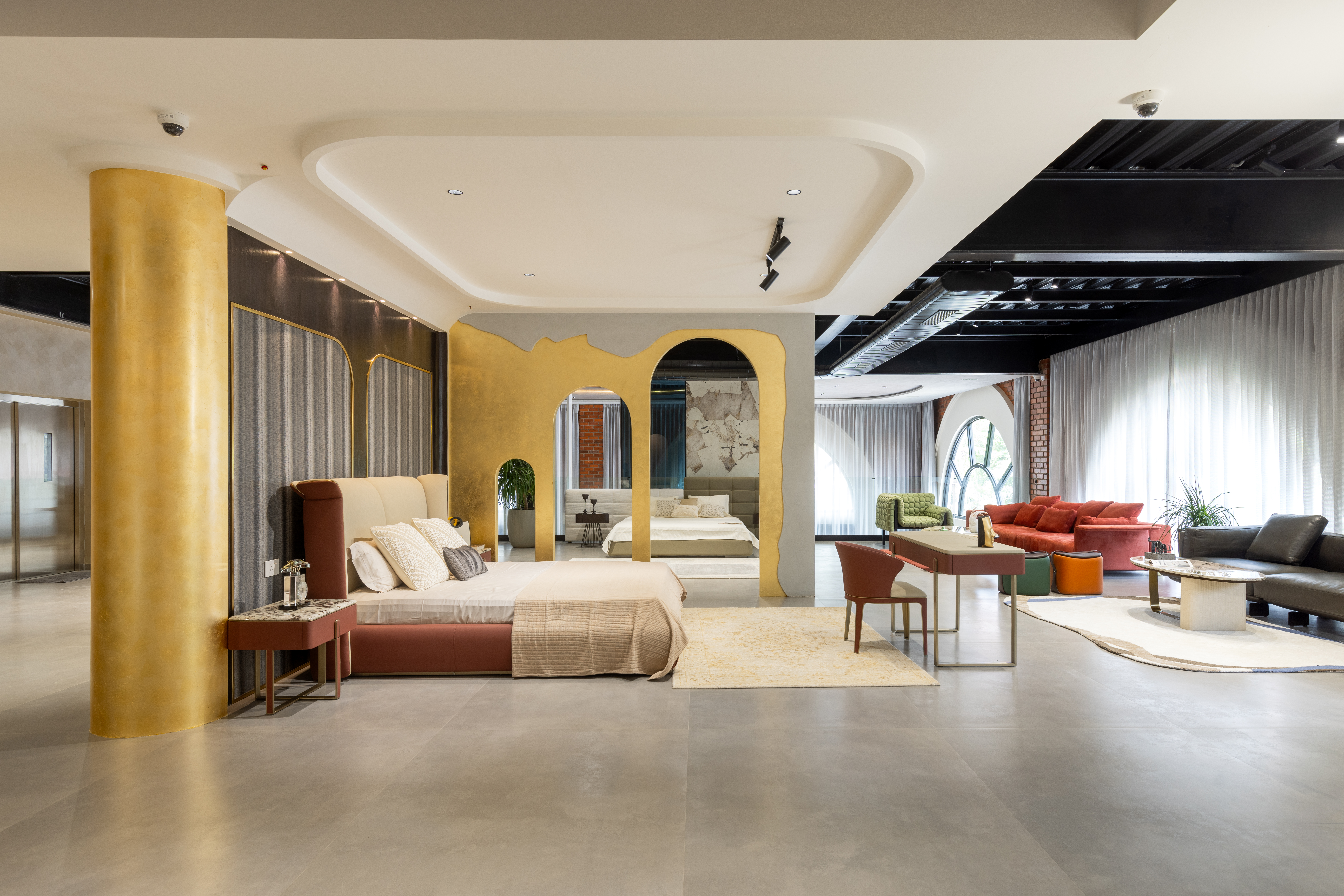
The showroom floor is a map of islands. Each rug is a room: the navy rug holds the black sofa and its plum companion; across the hall an amber rug gathers another. The bare polished floor between them is not leftover space — it is doing the work of walls, keeping each composition inside its own edge.
The rug decides where each room ends. The empty floor between two rugs is the architecture of the display.
One Room, One Colour
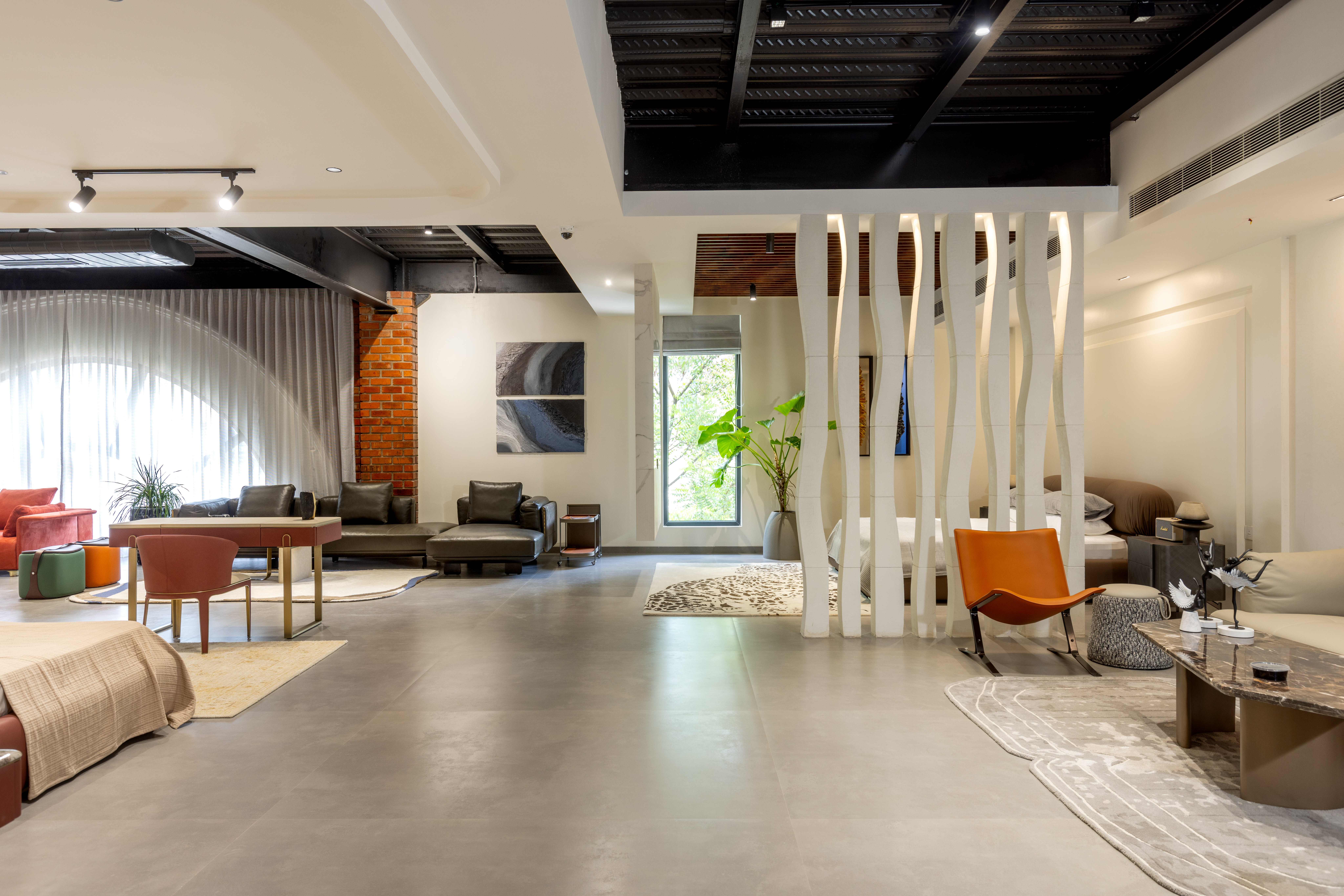
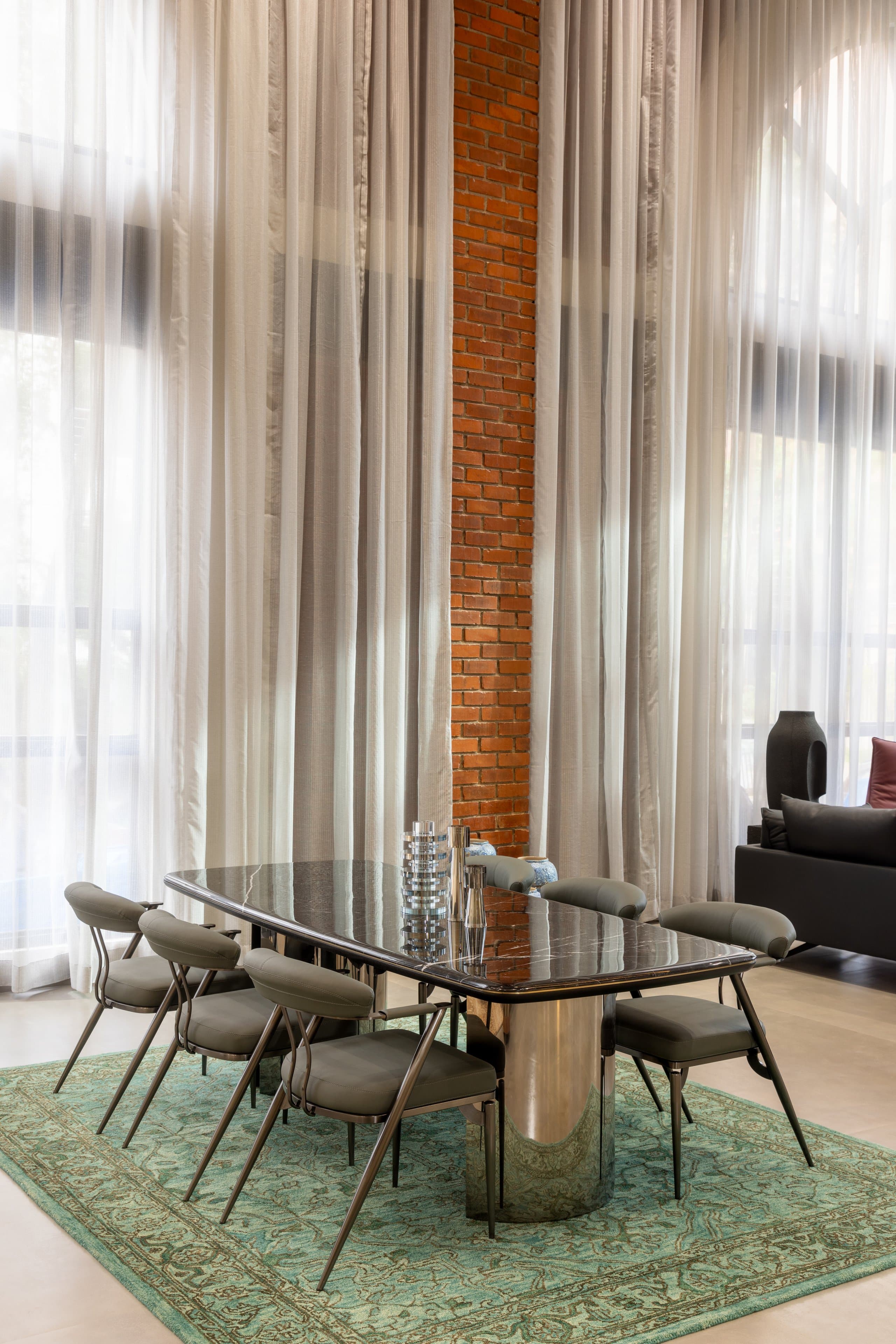
Colour is rationed by territory. In the red room, red is permitted everything — the velvet of the sofa, the cushions, the rug beneath — and then it stops at the rug's edge, answered only by one green chair standing opposite. A store that let every colour speak everywhere would roar. Here each room says one thing, completely.
Rooms to Believe In
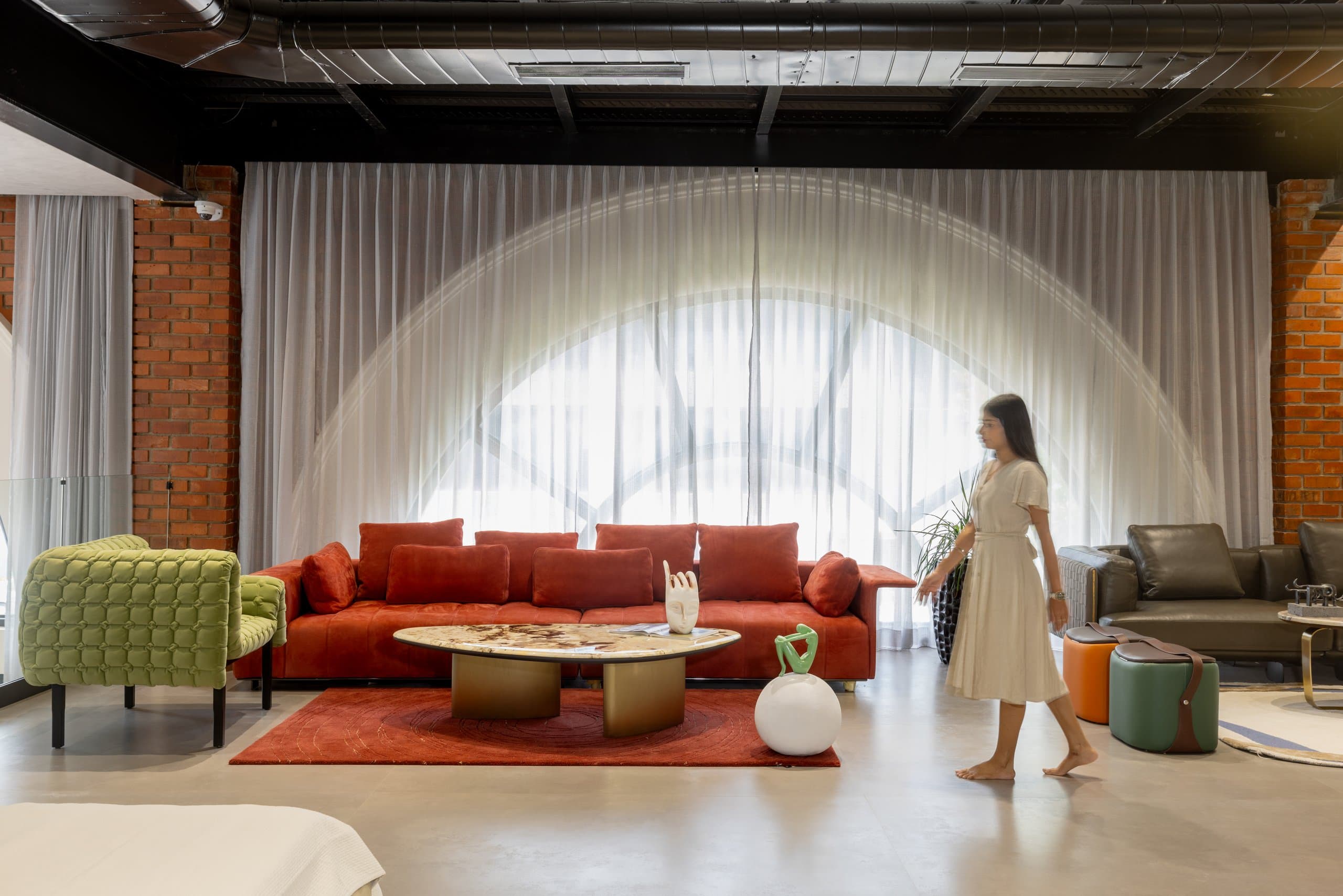
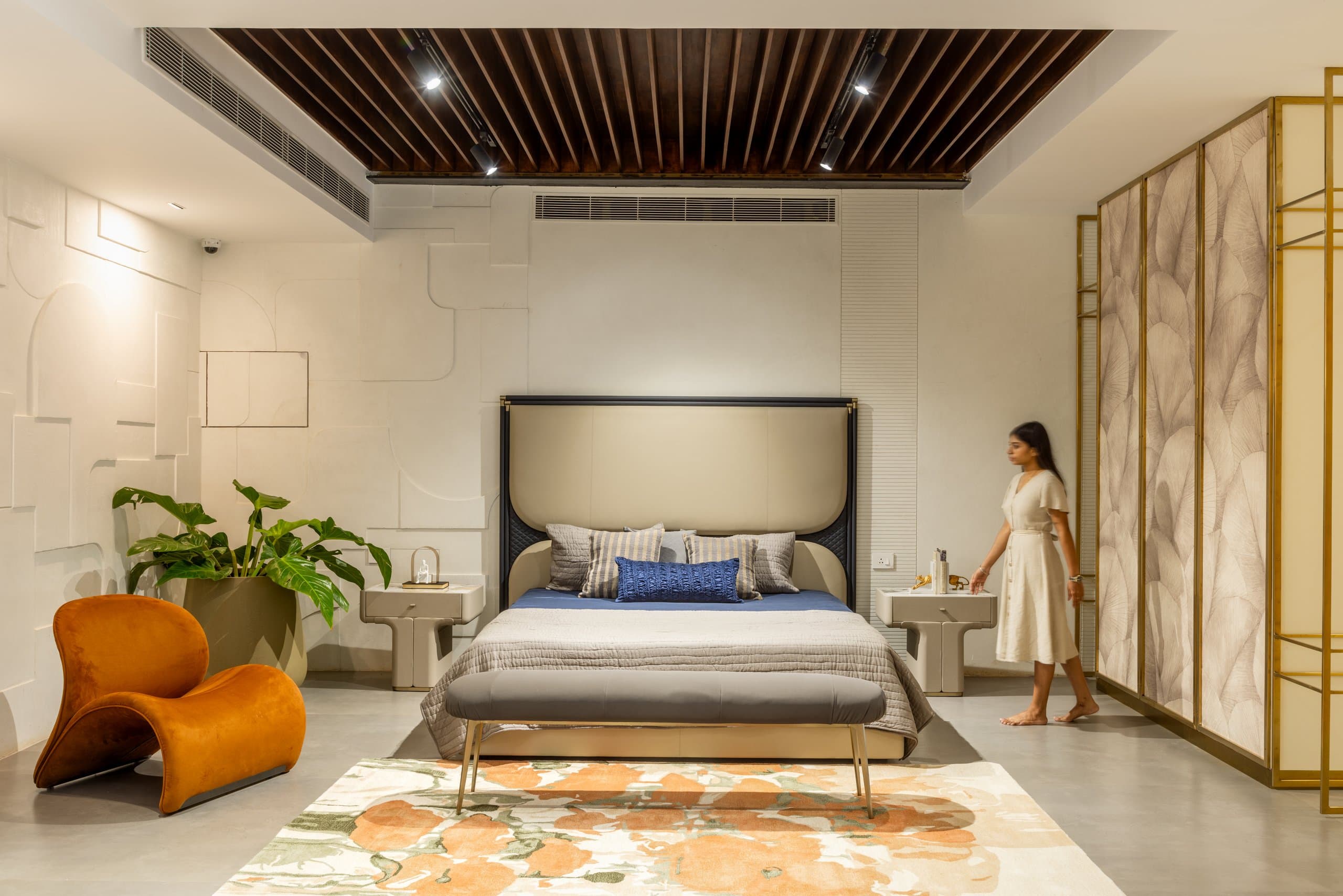
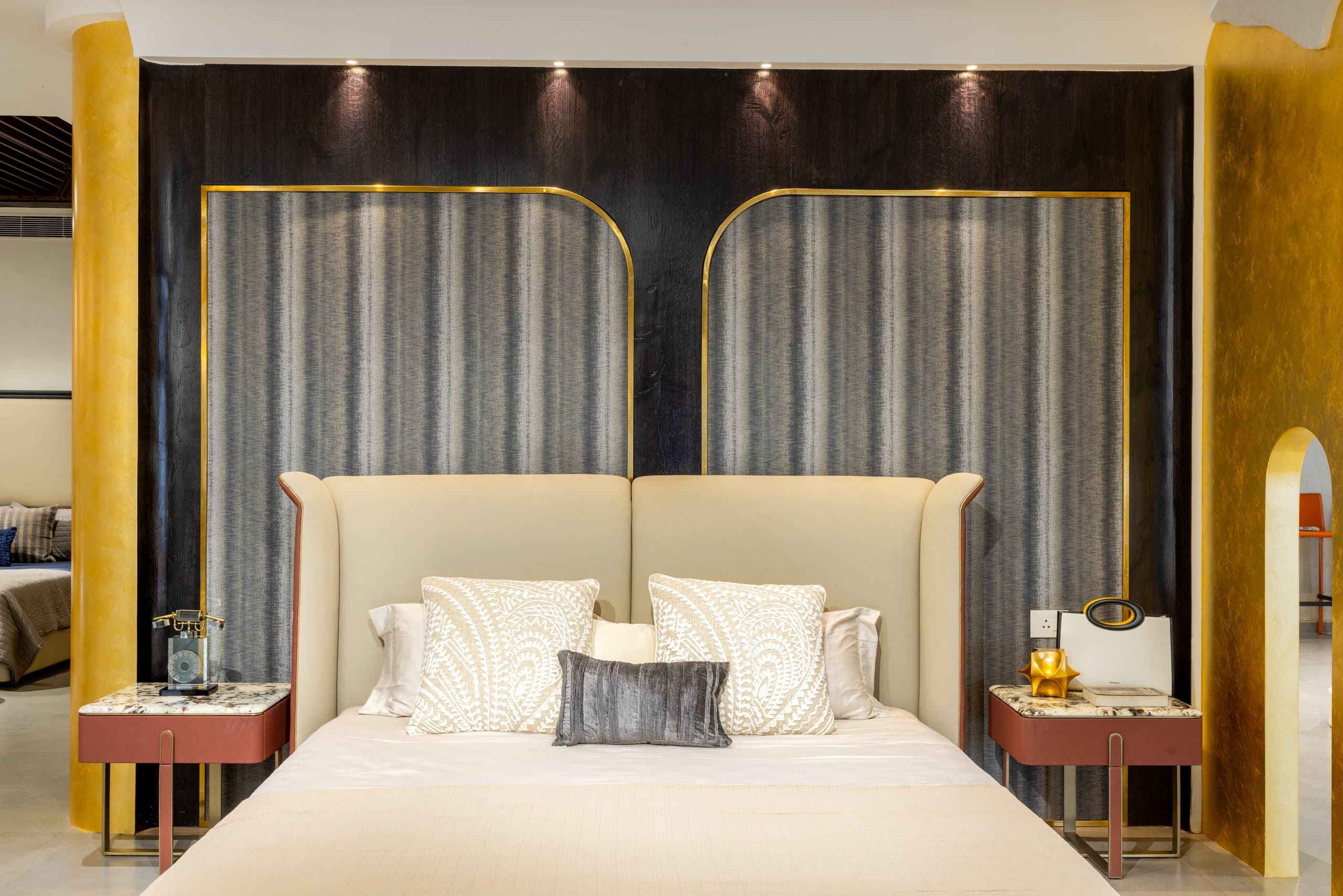
The bedroom vignettes are composed as rooms first and displays second: a canopy of timber slats, a bench at the foot of the bed, a screen catching the light, a rug that belongs to the bed rather than the floor plan. At the bedside, the styling goes to hand scale — embroidered cushions, a book, a telephone.
There is a telephone on the nightstand. Nobody will call. But furniture persuades when the room looks lived in, not displayed.
The Gallery Moment
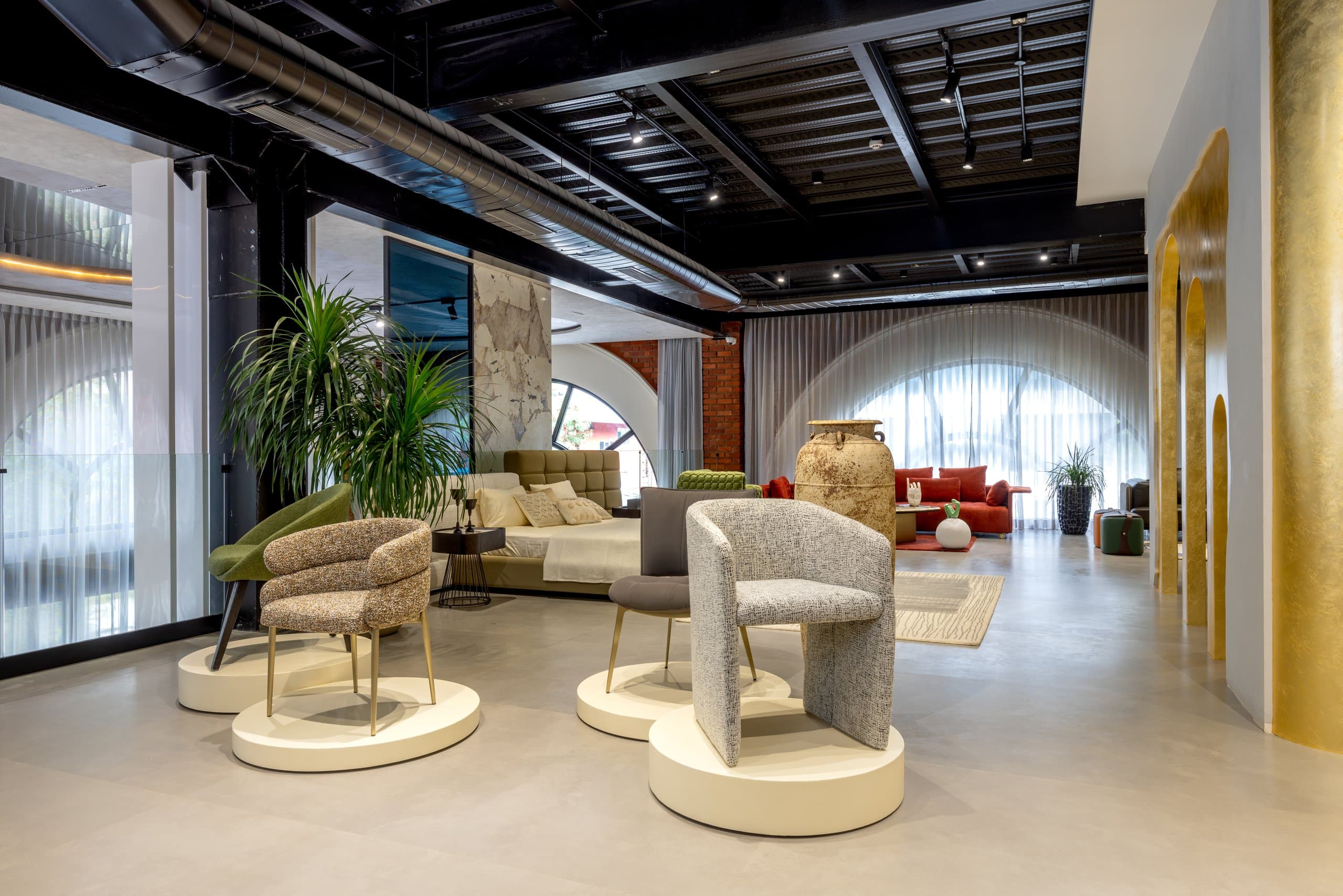
Most of the store conceals its retail inside rooms. In one place it is admitted openly — and even there, the admission is disciplined: one chair to a plinth, each on its own ground, read the way sculpture is read.
A row of chairs is inventory. One chair, alone on a plinth, is an argument.
Objects, Rationed
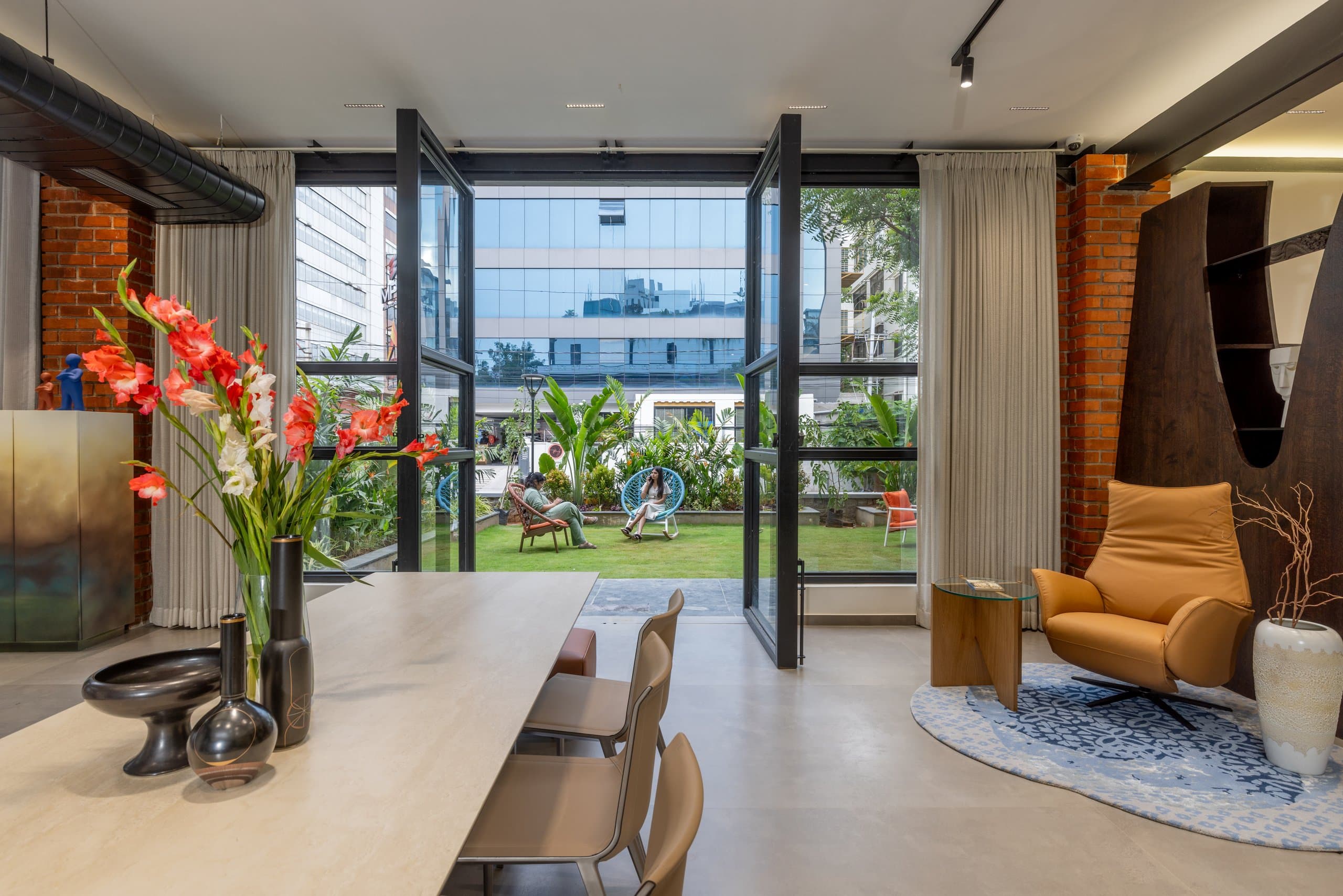
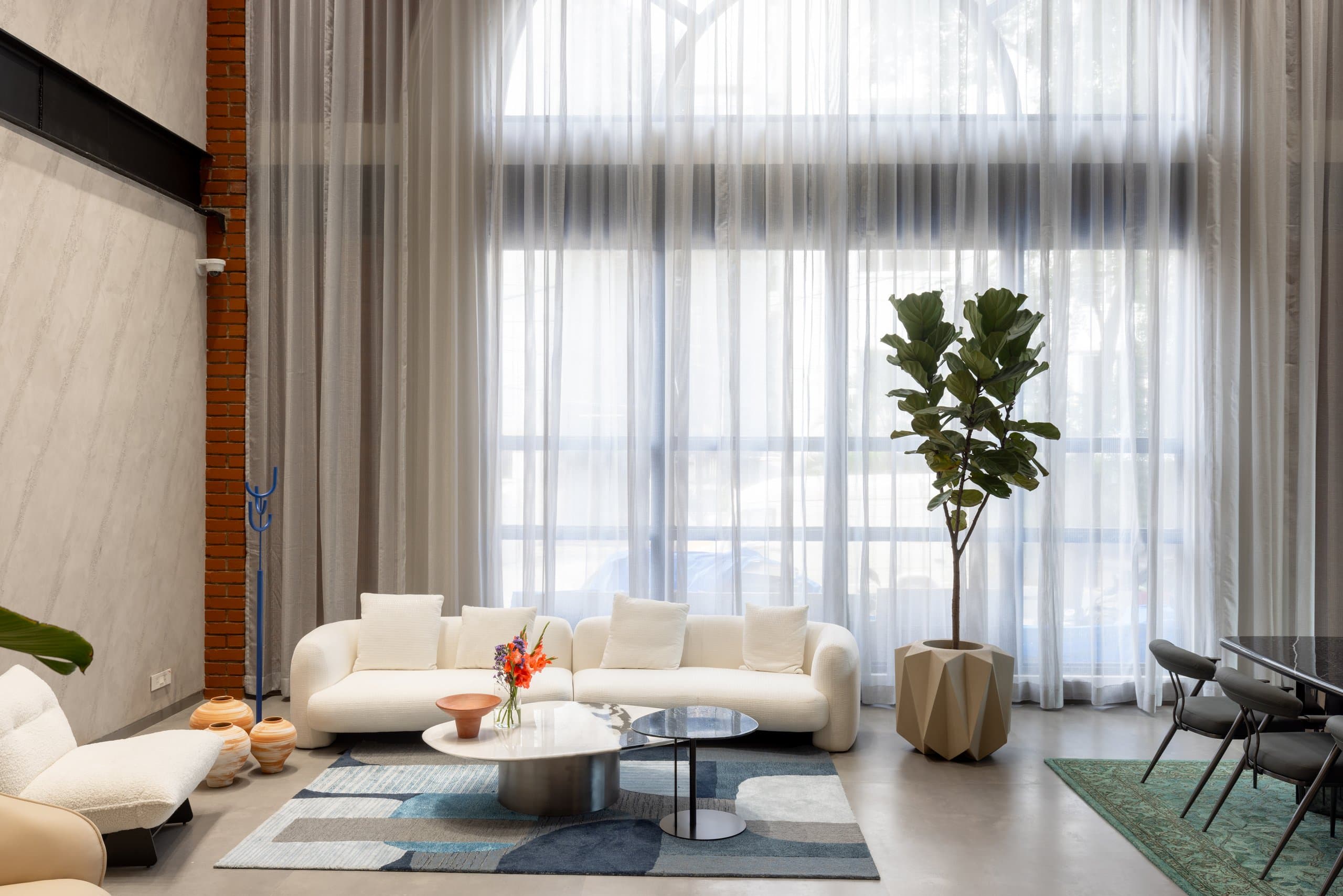
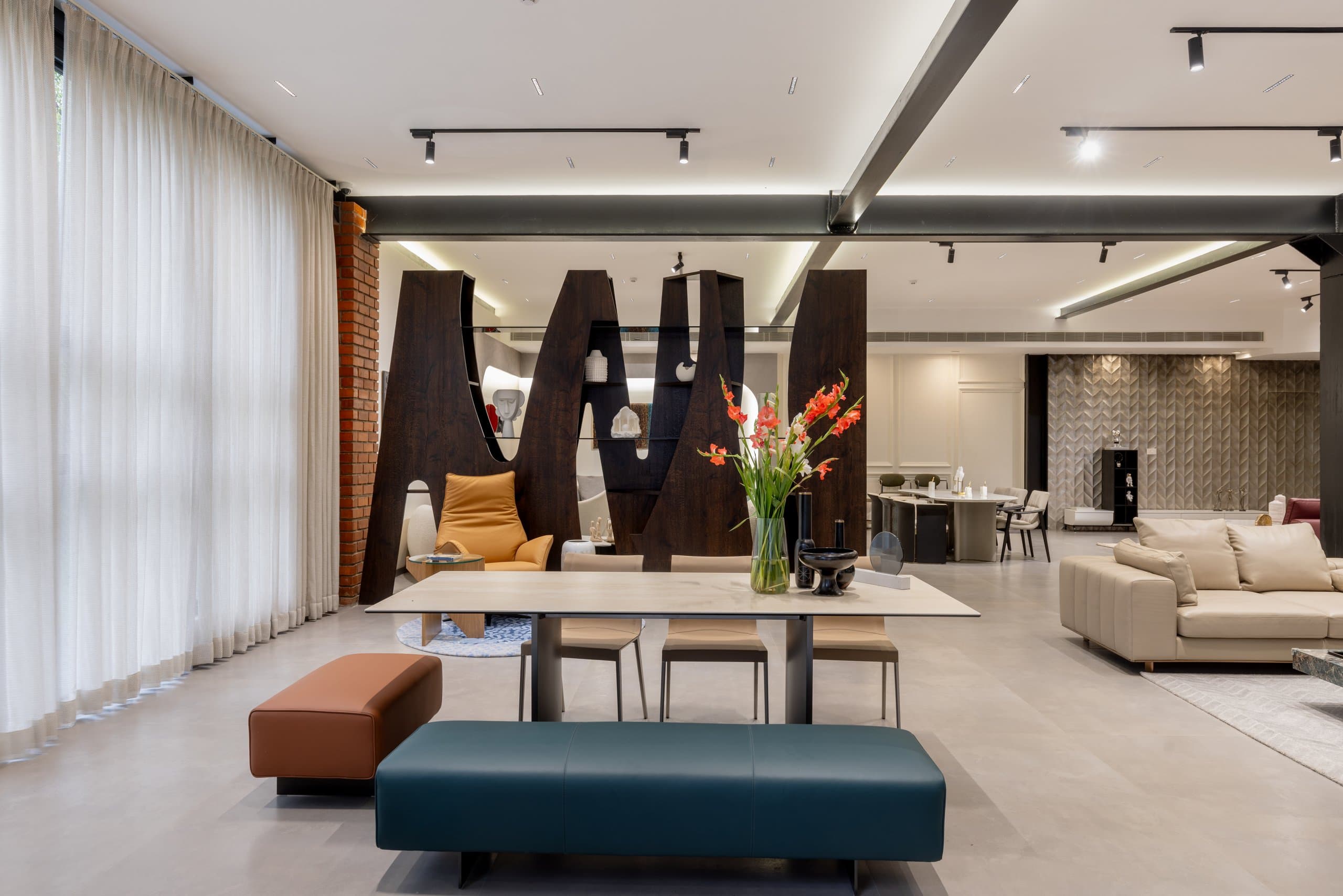
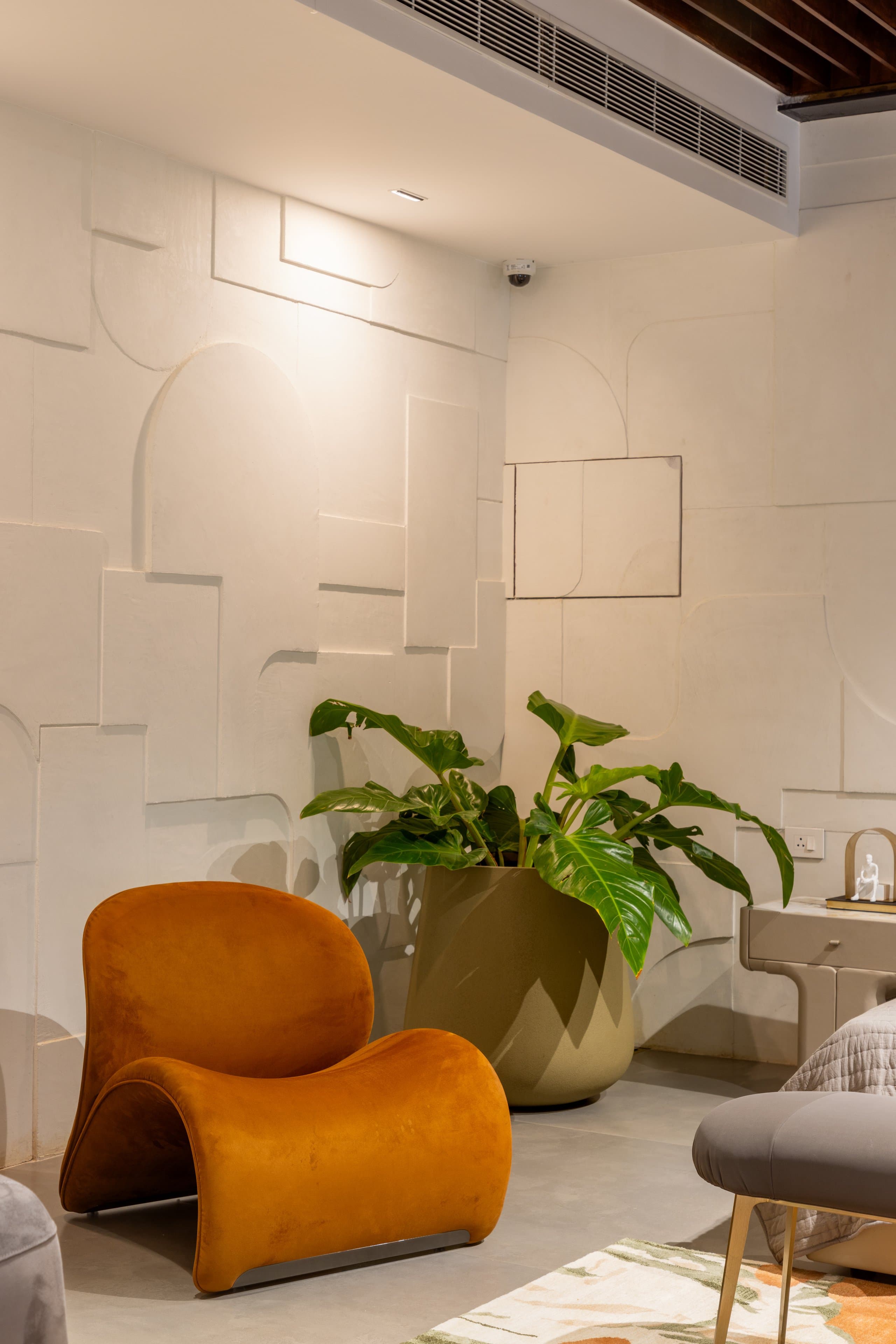
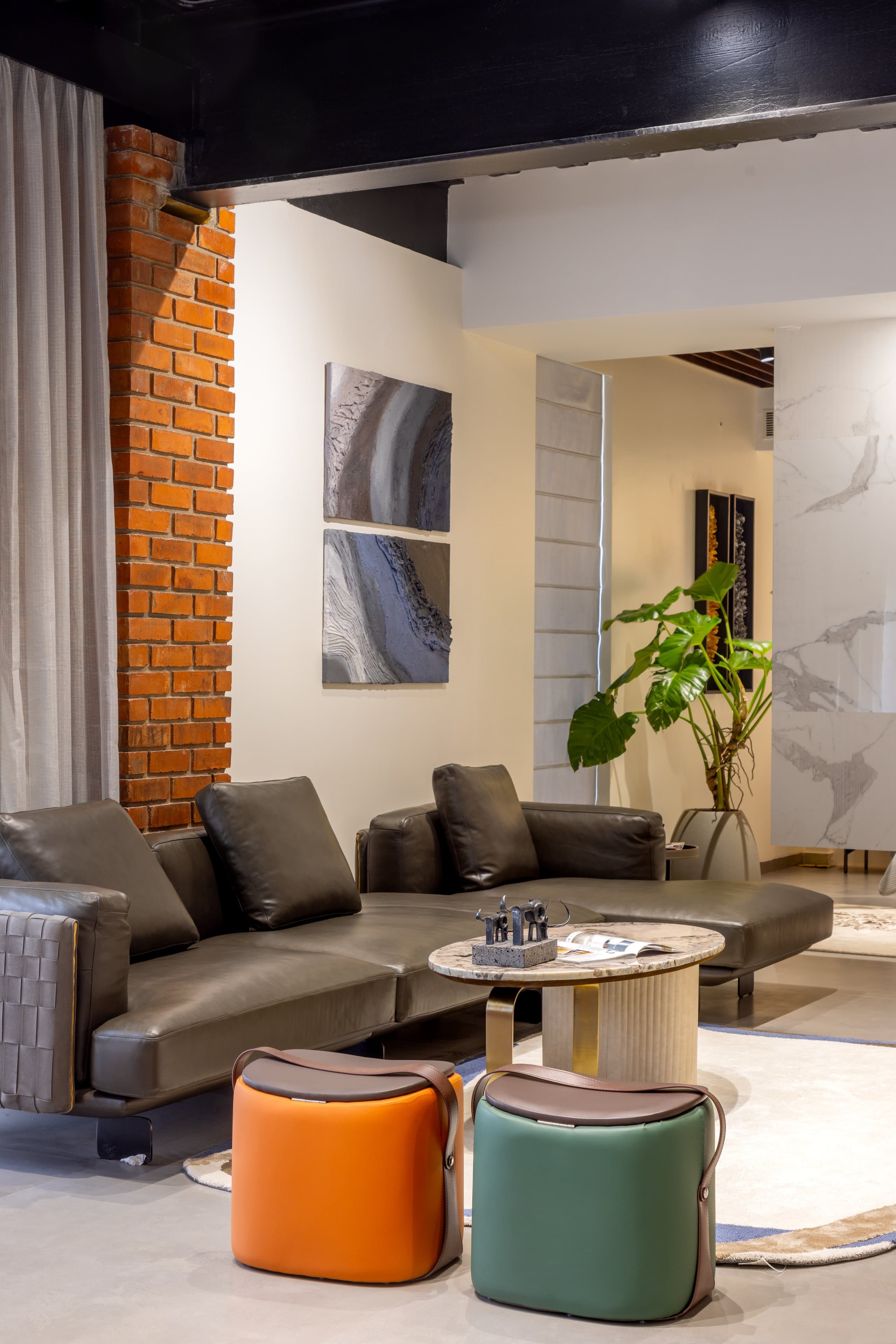
The tall shelf that divides the hall could hold fifty objects; it holds a dozen, each with a shelf's worth of air. Nearby, a dining table carries three dark vessels and a vase of gladioli — set as if for the house, not the catalogue. Some corners hold nothing but texture: mustard velvet against a relief-plaster wall, one planter, and the light. And through the store a single pairing repeats like a refrain — orange and green, on poufs, on chairs — so that rooms styled months apart still answer one another.
Styling a showroom is the same discipline as styling a house, under harder conditions: more objects, more claims on the eye, and every piece for sale. The answer at Risuona was never abundance. It was territory, relationship and restraint — rooms a visitor can believe, furniture given the space to argue for itself, and a floor that ends, deliberately, in daylight.